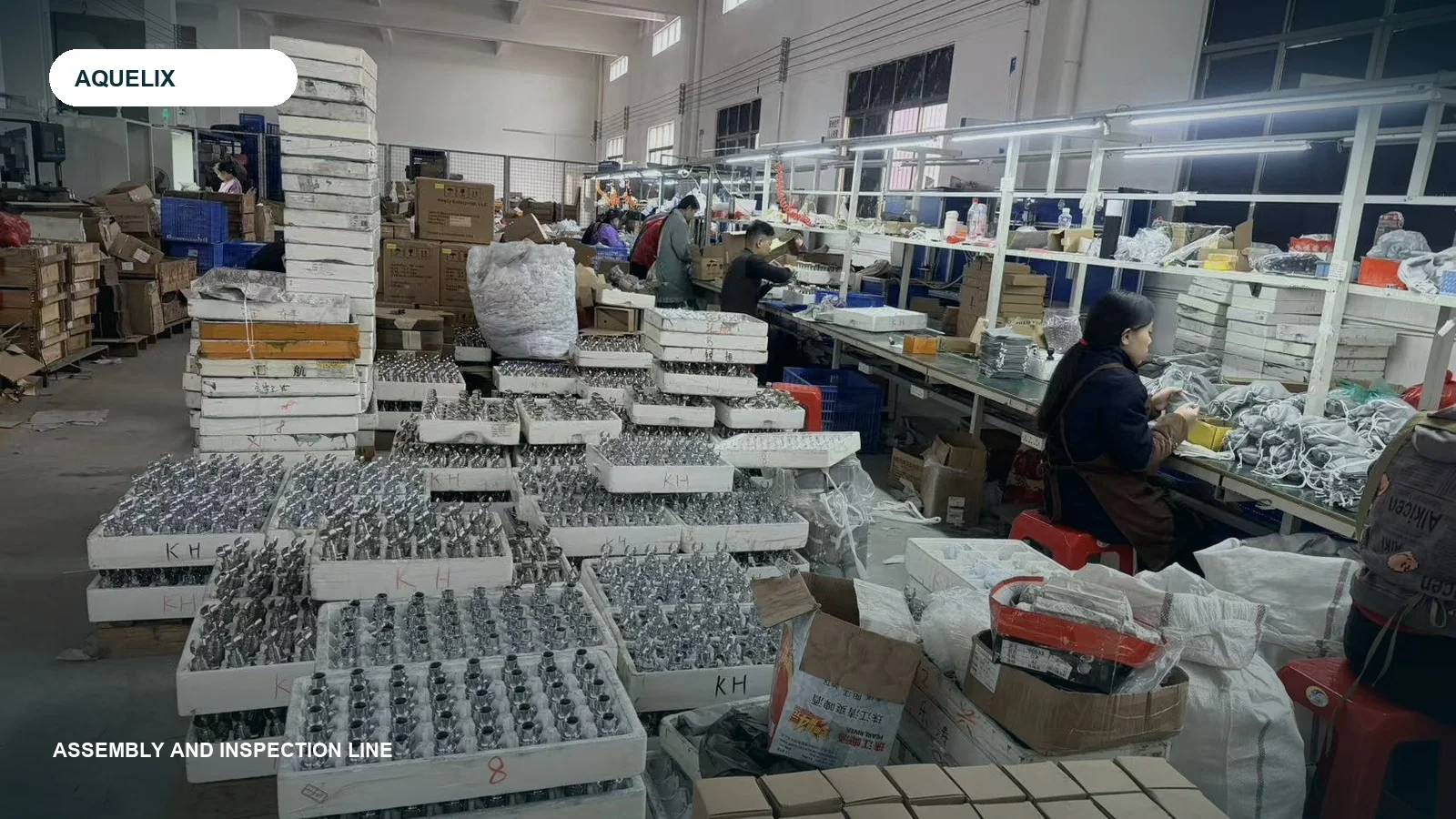
Define the lot before choosing samples
An AQL plan is meaningful only when the inspection lot is clear. Separate models, finishes, production batches, and packaging versions where their risks differ. Random samples should be drawn from completed cartons across the lot, not selected in advance by the factory.
Classify defects by buyer risk
Critical defects may include unsafe materials, severe leakage, missing compliance labels, or a construction that differs from the approved model. Major defects can include non-functioning cartridges, wrong threads, visible finish damage, missing accessories, or incorrect packaging. Minor defects are cosmetic or presentation issues that do not impair use. Agree classifications before inspection.
Combine visual checks with functional tests
Inspect model identity, dimensions, surface condition, handle movement, hose and thread fit, accessory count, markings, and carton data. Conduct leakage and flow tests using an agreed pressure and duration. Record the equipment used and photograph failures next to the carton or batch reference.
Use special tests outside routine sampling
Cycle life, salt spray, material composition, coating thickness, and packaging drop tests usually require different sample sizes, equipment, and lead times. Do not assume that a routine final inspection proves long-term durability. Schedule laboratory or production-validation tests at the appropriate stage.
Write the disposition rule in advance
The inspection agreement should explain what happens after failure: sorting, rework, replacement, reinspection, or shipment hold. A failed sample should never be resolved only with a cropped photo or verbal promise. Keep the corrective action and reinspection evidence with the purchase file.